SAVE UP TO 30% OFF AND GET FREE SHIPPING
PERFORMANCE NUTRITION - SPECIAL REPORT
Creatine: From
Fringe to Mainstream.
Hydrogen Water is Next.
The same scientific arc that turned a misunderstood molecule into the most researched supplement in history is now repeating itself—but this time, it's happening with molecular hydrogen.

BY THE HYDROFY RESEARCH TEAM - 12 MIN READ
Walk into any gym in 2026 and creatine is everywhere — in pre-workouts, in protein, in the water bottles of people who've never entered a powerlifting meet. It's the most-researched performance supplement in history, sitting on the shelf at every Target, CVS, and Walmart in America. It's easy to forget that for most of that history, creatine was a fringe product almost nobody outside elite sport took seriously.
I've been thinking about how that happened, how a compound goes from a niche gym supplement to a household commonplace because I'm watching the same pattern play out again with a different molecule.
The molecule is molecular hydrogen. And if you've heard of it, you've probably either heard it dismissed as "expensive water" or praised as the next great thing in wellness. Both reactions are understandable. They're also almost exactly what people said about creatine before the general public caught up.
I want to walk you through the parallel because the pattern is specific enough that if you understand it, you'll stop asking "is this real?" and start asking "why doesn't everyone know about this yet?"
THE CREATINE ARC - 1832 - PRESENT
From Niche and Unproven to
Undisputed Standard
Most people know creatine works. What most people don't know is how long it took the mainstream to admit it.
1832
DISCOVERY
French chemist Michel Chevreul isolates creatine from meat
Named after the Greek word for flesh ("kreas"). A scientific curiosity with no commercial application. Nobody outside the laboratory cared.
1920s
EARLY RESEARCH
Scientists discover creatine increases muscle creatine stores
The mechanism exists in the literature. No product exists. The sports world pays no attention.
Early
1990s
EARLY ADOPTION
Olympic sprinters quietly use creatine in Barcelona
Linford Christie and the British track team win gold. Word spreads in very small, very serious circles. The mainstream still hasn't heard of it — or dismisses it as a steroid-adjacent shortcut.
1996
ATHLETE ADOPTION
80% of athletes at the 1996 Atlanta summer olympics were using creatine
Elite athletes understand how the molecule works. The science exists but is early. This occurs right before it goes mainstream.
Late
1990s
TIPPING POINT
Creatine moves from elite locker rooms to mainstream sports
College athletes, professional players, and serious gym-goers begin using creatine at scale. What was once a niche performance secret becomes a staple of training programs across America.
2000s
MAINSTREM STANDARD
Creatine is the most research supplement in sports science history
Over 500 peer-reviewed studies. Recommended by sports medicine physicians, registered dietitians, and the International Society of Sports Nutrition. Sold in every pharmacy in America. A billion-dollar category.
2020s-
Now
EXPANSION
Creatine is now recommended for general wellness, healthy aging, cognitive health, and more
New research highlights benefits beyond strength and muscle, including healthy aging, cognitive performance, recovery, and overall wellness. Creatine becomes one of the first sports supplements adopted by athletes and non-athletes alike.
THE PATTERN
Discovery → Decades of ignored research → Early elite adoption → Mainstream skepticism at its loudest → Research becomes undeniable → Rapid mainstream acceptance → Universal standard. This arc takes 20–30 years. You are currently watching it happen again — on a faster timeline — with molecular hydrogen.
THE HYDROGEN ARC - NOW
Molecular Hydrogen is Exactly Where Creatine Was Before it Broke Through
Let me show you where hydrogen sits on this arc today — and why the parallel is more precise than you might think.

What is Molecular Hydrogen?
Molecular hydrogen (H₂) is a potent antioxidant that has been studied as a therapeutic agent since 2007, when a landmark paper in Nature Medicine demonstrated its ability to selectively neutralize the most harmful free radicals in the body — without interfering with beneficial reactive oxygen species. That paper triggered an explosion of research.
As of today, there are over 2,000 scientific publications on hydrogen therapy. 81 completed clinical trials. 64 human studies. Benefits documented across cardiovascular health, respiratory function, neurological protection, muscle recovery, and athletic performance including:
Combats inflammation and oxidative stress throughout the body
Supports metabolic health and biomarkers
Penetrates cell membranes and mitochondria; protects DNA and RNA
Supports faster muscle recovery and endurance
Promotes cardiovascular and respiratory health
Supports your microbiome and reduces gut inflammation
Helps maintain steady energy levels throughout the day
Supports healthy aging and longevity
Sound familiar? It should. This is precisely where creatine research was in the mid-1990s — too substantial to ignore, not yet mainstream enough to be taken seriously by the general public.
"The science on creatine was there for decades. The people who acted on it early didn't get smarter in the 2000s — they just got there first."
Here's the part that makes this exciting for performance-focused people: the adoption curve for evidence-based supplements is compressing. Creatine took ~30 years from discovery to mainstream. The internet didn't exist for most of that journey. Today, the researchers, athletes, and physicians who are 3–5 years ahead of the curve have a much shorter window before this becomes common knowledge.
That window is now.
THE MECHANISM
Why Hydrogen Works Differently Than Anything You've Tried
Before you can understand why hydrogen matters for hydration and performance, you need to understand one thing about creatine that most people never learned:
Creatine didn't give you more energy as a stimulant. It worked by replenishing ATP — the cellular energy currency — at a rate faster than anything else.
It was a cellular mechanism, not a surface-level effect. That's why the people who understood the mechanism were believers long before the mainstream caught up.
Molecular hydrogen works on a different mechanism. But it's equally cellular — and equally misunderstood.
The Size Advantage
H₂ is the smallest molecule in the universe. That fact alone is what makes it unlike any other antioxidant, electrolyte, or recovery compound ever studied. Because of its size, molecular hydrogen can go where other antioxidants can't.

✓ Penetrates cell membranes freely
✓ Crosses the blood-brain barrier
✓ Reaches mitochondria directly
✓ Travels throughout your body
The Selectivity Advantage
Most antioxidants (like Vitamin C and glutathione) are indiscriminate — they neutralize both harmful and beneficial reactive oxygen species. Hydrogen however, selectively targets the most damaging free radicals (hydroxyl radical, peroxynitrite) while leaving the beneficial ROS needed for cell signaling, immune response, and metabolism untouched.

No other compound is this precise, which is what makes Hydrogen uniquely effective without side effects. You get the protection without disrupting the biological processes your body depends on.
The Source Advantage
Your gut microbiome naturally produces molecular hydrogen every day as a byproduct of fermenting fiber and prebiotics — and your body has evolved to use it. This isn't a foreign compound your body has to figure out what to do with. It's a biological signal your cells already recognize and respond to.

When you drink Hydrogen-rich water, you're not introducing something new — you're amplifying a process that's already happening inside you. That's why hydrogen has an exceptionally clean safety profile across thousands of studies: your body already knows how to use it.
The Timing Advantage
Most supplements require digestion, absorption, and metabolic conversion before they do anything useful — that process can take 30–90 minutes or longer.

Hydrogen doesn't work that way. Because it's a dissolved gas, it's bioavailable almost instantly the moment it enters your system — no breakdown required, no waiting for your liver to convert it into an active form. This makes it uniquely effective across a range of uses:
✓ Pre-workout: before oxidative stress hits
✓ Post-workout: when oxidative stress and inflammation peak
✓ Daily inflammation management: chronic low-grade inflammation builds over years, daily hydrogen helps prevent accumulated damage
✓ Longevity and cellular protection: compounding benefit protect cellular function and reproduction
THE EXPANSION
Creatine Didn't Stop at Muscles.
Neither Will Hydrogen.
By the early 2000s, creatine was established. Athletes used it. The research was settled. Most people assumed the story was over: creatine = bigger muscles, faster recovery, done.
Then, neurologists started running trials. Psychiatrists got interested. Longevity researchers started writing papers. And slowly, a second chapter of the creatine story emerged — one that had nothing to do with the gym.
It turns out the brain is one of the most energy-hungry organs in the body. And the phosphocreatine system that powers muscle ATP regeneration is the same system that powers neural energy metabolism. The brain runs on the same fuel pathway. It just took 70 years for anyone to think to study it.
Today, researchers are running trials using 20g of creatine per day specifically targeting cognitive function — a dose four times higher than the athletic standard, because the blood-brain barrier limits creatine uptake and the brain needs more to saturate neural tissue.
CANDOW ET AL., SPORTS MEDICINE 2023 · TAYLOR ET AL., ALZHEIMER'S & DEMENTIA 2025
Researchers at the University of Kansas Medical Center ran an 8-week trial using 20g/day of creatine monohydrate in patients with Alzheimer's disease — studying whether it could improve brain bioenergetics and slow cognitive decline. A 2025 paper in the Journal of Psychiatry and Brain Science concluded that for brain health specifically, "more is likely better" — because standard 5g doses may fully saturate muscle tissue but leave brain creatine stores sub-optimal.
That arc — from "fringe gym supplement" to "cognitive and longevity medicine" — didn't happen because creatine changed. It happened because the researchers finally looked at what the molecule was doing at the cellular level, and realized the implications were far bigger than anyone initially understood.
The same thing is happening with hydrogen water right now. The research is mounting. The early adopters are already drinking. The only question is how long before everyone else catches up.
HYDROGEN + ELECTROLYTES + MINERALS
Save Up To 30% OFF
Hydrogen is the Upgrade.
Hydrofy® is How You Get It.
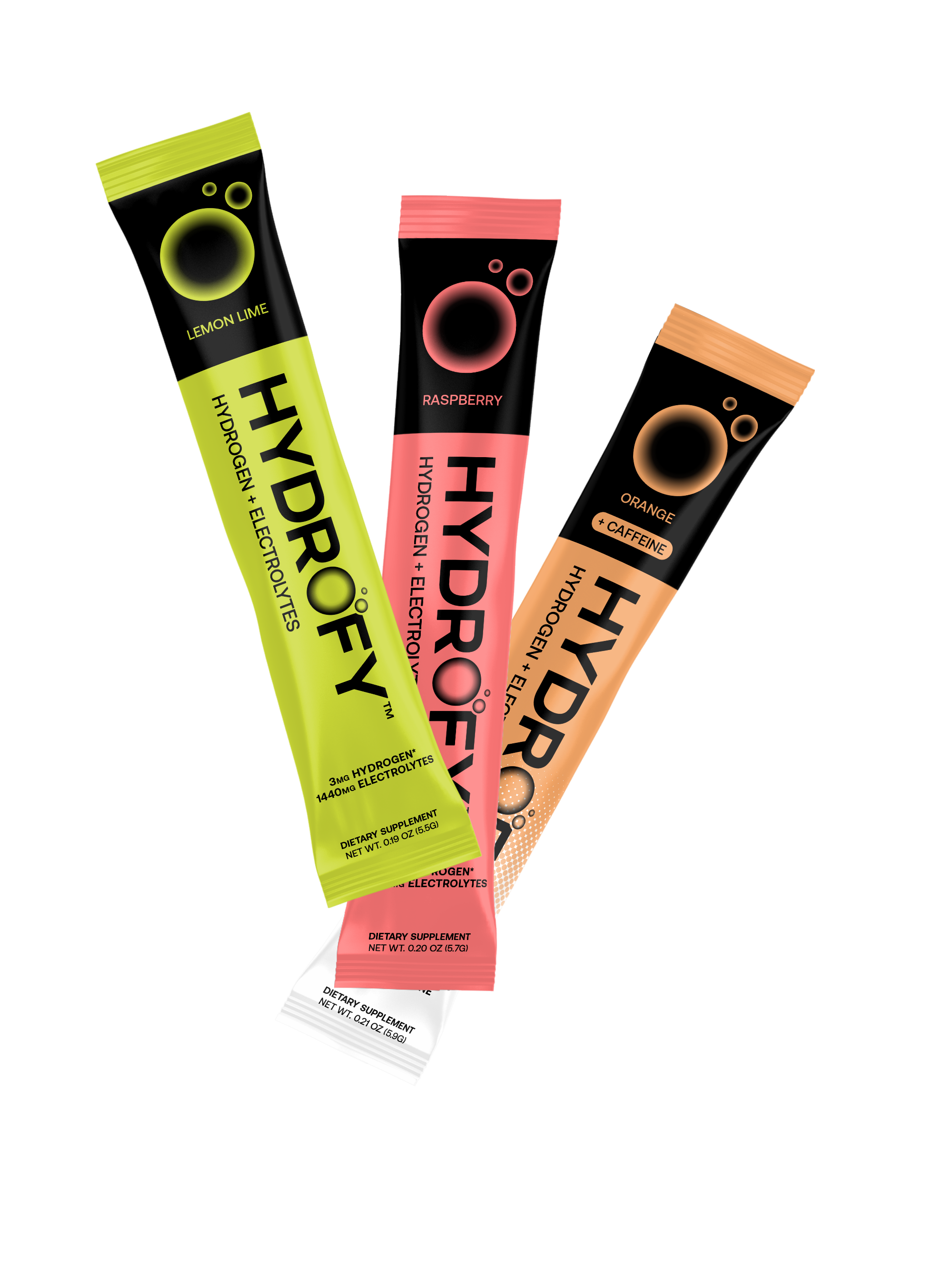
The world's first hydrogen-infused electrolyte. One stick. Daily.

Most people interested in molecular hydrogen end up with $1,000+ expensive machines that degrade over time or tablet products that taste terrible, upset your stomach, and provide hydrogen alone.
Hydrofy is different — it combines a therapeutic dose of molecular hydrogen with a complete electrolyte and mineral blend designed for what most people are actually deficient in. Not overloaded with sodium. One stick replaces three products. And it fits in your pocket. 4,300+ 5-Star reviews.
Fights oxidative stress and inflammation throughout the body
All-day sustained energy and focus
Fuels athletic performance and muscle recovery
Powerful wholebody antioxidant protection
Full-spectrum electrolytes without the sodium overload
Mineral complex with zinc, iron, copper, and more!
Zero sugar, gluten-free, made in the USA
Try Hydrofy Today, Risk-Free!
For a Limited Time Enjoy Free Shipping + Bundle & Save
| Most Popular | Best Value | ||
|
|
|
|
|
1 Bag |
2 Bags |
3 Bags |
4+ Bags |
| Save 10% | Save 15% | Save 25% |

Who Is Hydrofy For?
Hydrofy is for anyone who stays active and wants to feel their best every day. Whether you're hitting the gym, going for runs, playing recreational sports, or just trying to keep up with a busy life — if you want more energy, faster recovery, and better hydration, Hydrofy is for you.
What's In Hydrofy?
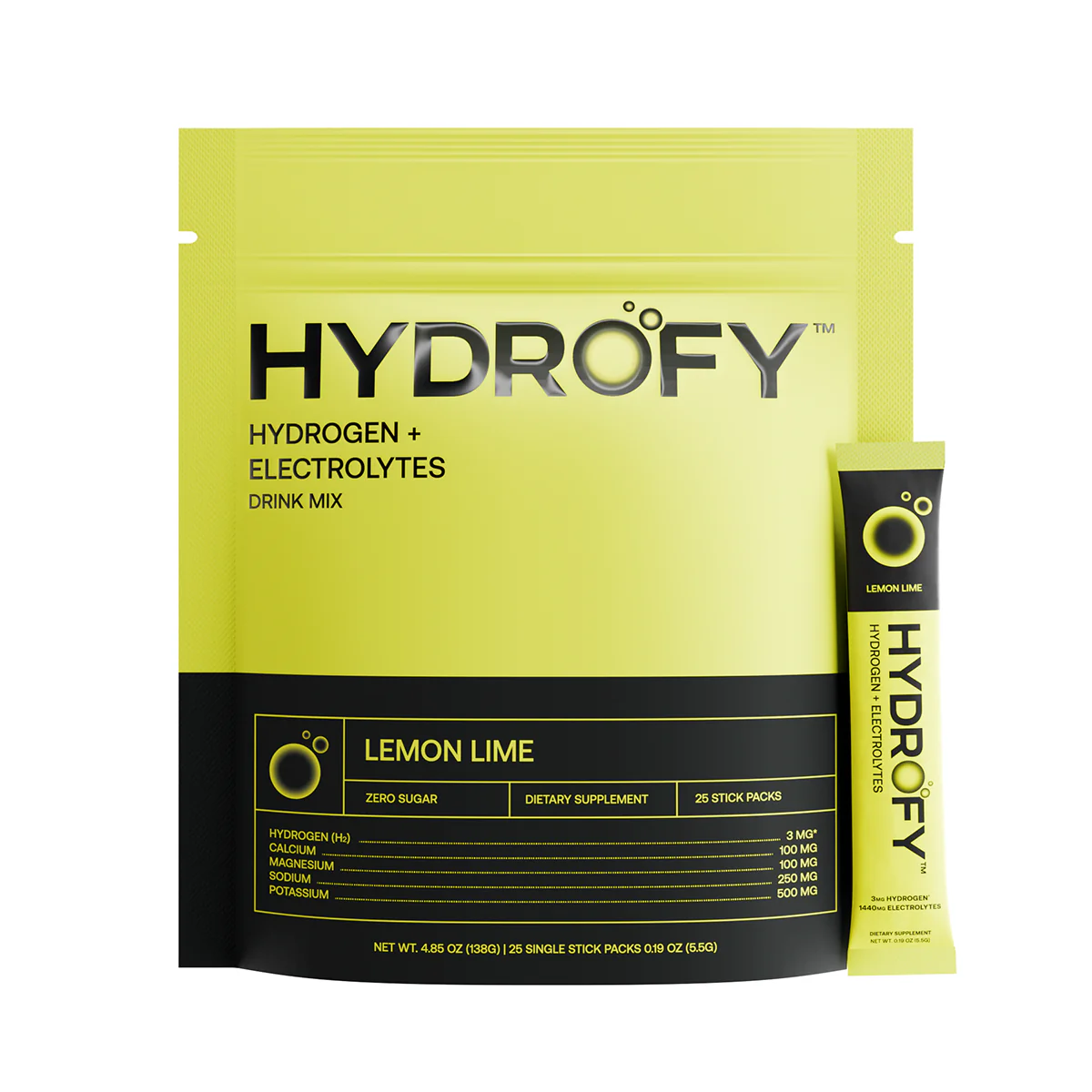
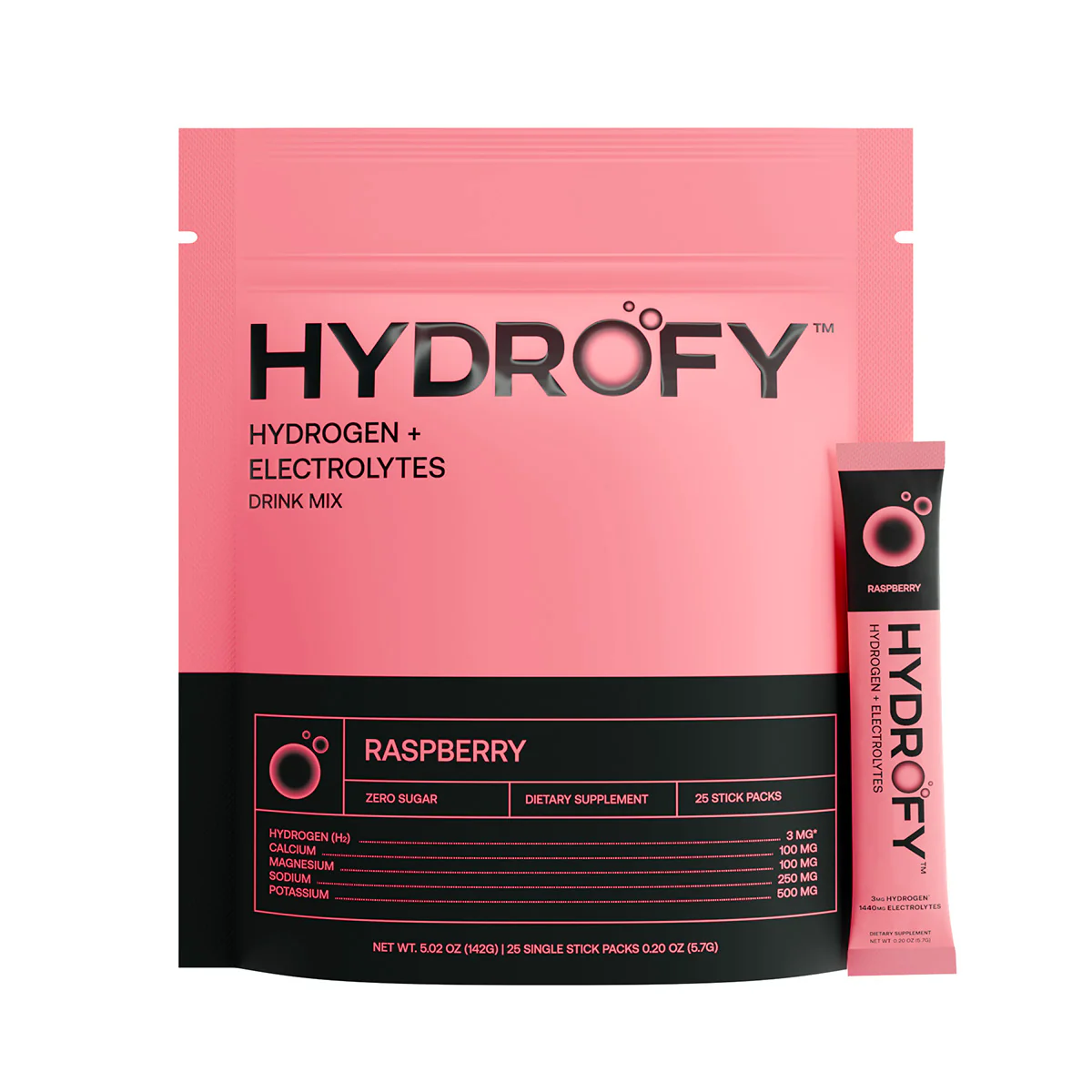
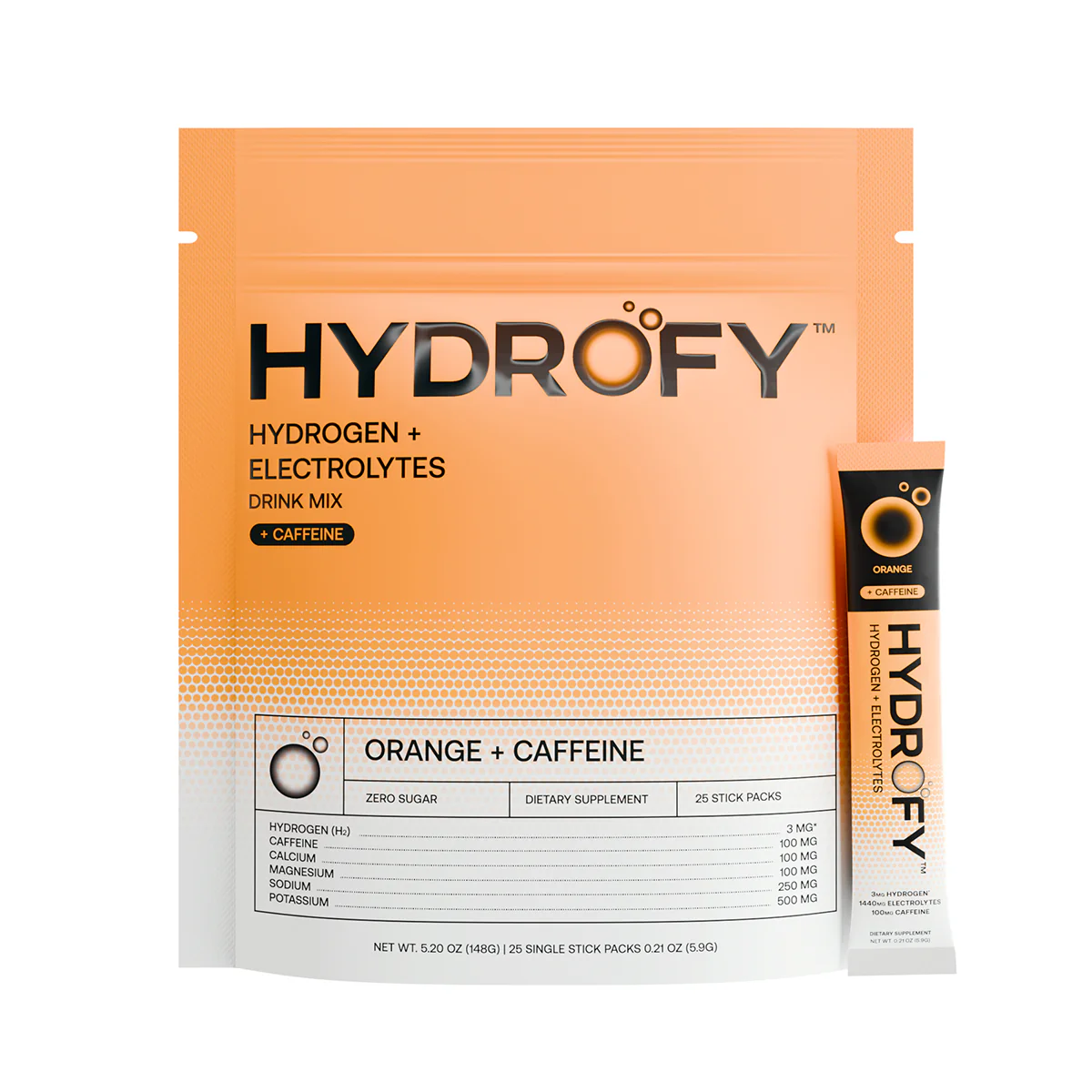
Hydrofy contains molecular hydrogen, and a full-spectrum electrolyte and mineral blend that focuses on common deficiencies like potassium, magnesium, and calcium without the sodium overload.
How Do I Use Hydrofy?
Pour one packet into 16-32oz of water, shake it up, and drink. That's it! Drink 1-4 packets a day, as needed.
What Does Hydrofy Taste Like?
Hydrofy has a clean, light, and true to fruit refreshing taste — not overly sweet like Liquid IV and not overly salty like LMNT.
Why Should I Subscribe?
Most people notice the biggest difference when they use Hydrofy consistently every day. Subscribing locks in discounts off every order, includes free US shipping, and lets you pause or cancel anytime — no commitment, no hassle. It's the easiest way to make better hydration a daily habit!
Here's What Changes When You Drink Hydrofy Everyday
Most people's bodies are under attack from inflammation and chronic electrolyte and mineral deficiencies without realizing it. They just deal with low energy, muscle and joint soreness, brain fog, irritability, headaches — these aren't just part of a busy life. This is what changes when you fix the root cause with Hydrofy.

Less Inflammation

More Energy

More Focus

Better Workouts

Less Soreness

Whole body Optimization
The Science Behind Hydrofy's Formula
13 research-backed electrolytes, minerals, and antioxidants - optimized for benefits that compound over years!
Molecular Hydrogen
A potent antioxidant to fight inflammation and protect long-term cellular health.

Potassium Chloride
The most common deficiency in adults, supports muscle function and nerve signaling.

Ancient Pink Sea Salt
A cleaner source of sodium with natural trace minerals to move water, fire nerves, and fuel muscle movement.

Magnesium
Drives water absorption into your cells and supports over 300 bodily functions.

Calcium
Balances cellular fluids, supports muscle contraction, and helps prevent fatigue and cramping.

Mineral Complex
Zinc, Iron, Copper, Manganese, Chromium, and Selenium to support cell and muscle function.

Vitamin C
An antioxidant that supports immune function, collagen production, and helps your body absorb minerals.

Zero Sugar
Clean energy and hydration without the crash, no sugar means no spike, no bloat, and no extra calories.

View Ingredients & Nutrition Facts
What People Are Saying About Hydrofy
Pam


Verified Buyer
Great Tasting Electrolytes
Great tasting electrolytes, dissolves easily, and leaves me feeling hydrated during my workouts. Minus the unnecessary excess salt that most electrolytes I've used in the past have. It's my new daily driver!
Amazon Customer
Verified Buyer
Best Tasting Hydration
This has become a staple in my routine. I have a hard time with the saltiness and thickness of other hydration packs. But the added minerals make the water feel more balanced and refreshing, and the hydrogen gives it a clean, light taste that's hard to explain until you try it. It tastes great and helps me recover from workouts faster. Highly recommend!
Brian A.
Verified Buyer
First Time User
Great results — Raspberry flavor was the favorite among my kids.
Try Hydrofy Today!

No Spam Ever
New Flavors
Limited Time Deals
Contact Us
Manage Subscription
Hydrofy, Inc. All Rights Reserved 2026.